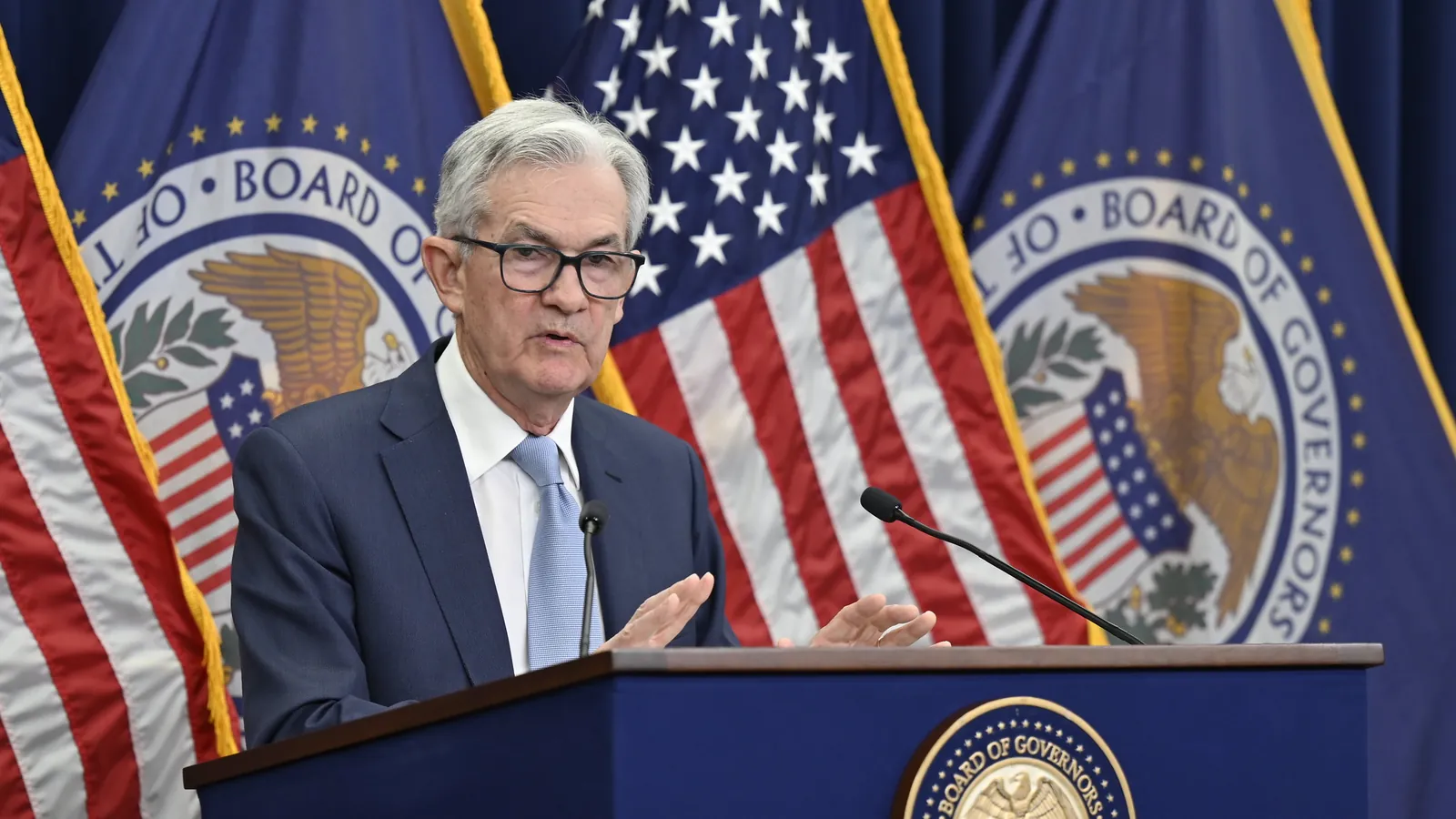
On December 14, 2022, the Federal Reserve raised interest rates by 50 basis points. The decision was widely expected, yet US stocks finished the day lower. Reuters, December 14, 2022
If traders already anticipated the rate hike, what was left for markets to react to?
The answer lies partly in what else investors learned that day. Alongside the expected hike, the Fed issued its FOMC statement, and officials released economic projections indicating a higher policy-rate outlook for 2023 than they had projected three months earlier. The median projected year-end 2023 rate rose from 4.6% in September to 5.1% in December. Federal Reserve projections Investors also had to assess the Fed’s statement and Chair Jerome Powell’s comments.
The immediate decision was familiar, but the broader outlook gave markets more to consider. This helps explain why markets can move sharply after an expected announcement while another significant-sounding decision produces surprisingly little reaction.
Why an Expected Rate Decision May Cause Little Reaction
Financial markets don’t wait for the Federal Reserve to announce its next move. Investors continually assess economic reports, central bank communication, and financial conditions to estimate where interest rates may be heading. Those expectations can influence asset prices long before an FOMC meeting takes place.
Suppose traders broadly anticipate a 25-basis-point rate hike at the next meeting. Bond yields and stock valuations may already reflect some of the expected consequences. If the Fed delivers that hike, the decision itself may add relatively little new information.
This is what traders mean when they say an event was priced in.
It doesn’t mean everyone expected exactly the same outcome, or that prices must remain unchanged when the announcement arrives. Investors may assign different probabilities to several possible decisions, and uncertainty remains even when one outcome is considered highly likely.
What matters is how the announcement compares with the expectations already reflected in market prices.
What Makes a Fed Announcement a Surprise?
The clearest surprise occurs when the Fed makes a different interest-rate decision from the one markets had anticipated.
Suppose a 25-basis-point cut is widely expected. If policymakers leave rates unchanged, the outcome is more restrictive than the anticipated cut. If they reduce rates by 50 basis points instead, the immediate decision delivers more easing than expected.
But an FOMC announcement contains more than a decision about today’s interest rate. The Fed may change its assessment of inflation, employment, economic growth, or the likely course of monetary policy. Its statement, projections, and press conference can introduce information that investors had not fully anticipated.
This creates an important distinction between a surprise in the current rate decision and new information that changes expectations about future policy. A meeting can contain one without the other. Even when the immediate decision matches expectations, traders may substantially revise their outlook for subsequent meetings.
Explore: Expectations vs. Reality
Use the explorer to change the probabilities assigned to different rate decisions, select what the Fed actually does, and test what happens when its guidance about future rates differs from prior expectations. The illustrative probabilities are not live market data.
Expectations vs. Reality
One Fed meeting, two kinds of news. Adjust what markets expected, then explore what they learned.
1 What was priced in?
Illustrative probabilities immediately before a Fed meeting. Drag the sliders; totals always equal 100%.
These probabilities are invented for teaching. Real futures-derived probabilities are estimates, not certain forecasts.
2 What did the Fed decide?
The cut had a 70% illustrative probability. It was the most heavily priced outcome, but there was still a 30% chance assigned to other decisions.
3 How did guidance compare with expectations?
Keep your selected rate decision fixed. Now change the message relative to the previously expected policy path.
If the message also matches expectations, this meeting may contain comparatively little new information about future policy. Other news can still move prices.
How Markets Estimate the Fed’s Next Moves
Market expectations aren’t formed only through economic forecasts or commentary from analysts. Financial instruments also provide information about how investors are pricing possible interest-rate outcomes.
One important example is federal funds futures. These contracts are linked to the average effective federal funds rate over a calendar month. Their prices provide information about the market’s pricing of future short-term interest rates.
The CME FedWatch Tool uses these futures prices, together with specific assumptions, to estimate probabilities for possible rate decisions at upcoming FOMC meetings. CME methodology
Suppose FedWatch indicates a 75% probability of a 25-basis-point cut and a 25% probability of no change. The cut is the more heavily priced outcome, but it is not certain. A hold would contradict the outcome receiving the greater probability, while an actual cut would resolve uncertainty that still existed before the meeting.
These probabilities can change as economic information arrives. They are also model-derived estimates, not promises about what the Fed will do or direct measurements of every investor’s beliefs.
For traders, their value lies in showing which outcomes markets are pricing and how that pricing changes over time, rather than providing a guaranteed prediction.
Why Expectations for Future Rates Matter
An FOMC decision determines the current policy setting. Investors, however, must also consider how interest rates might evolve over the coming months and years.
Suppose a 25-basis-point cut is expected and delivered. Policymakers then indicate that inflation remains a significant concern and further reductions may be limited. The immediate decision contains little surprise, but the communication may lead traders to anticipate higher interest rates over the coming months than they had previously expected.
That change can affect financial markets even though today’s rate decision was widely anticipated.
For example, a two-year Treasury yield reflects expectations about short-term interest rates over the security’s remaining life, alongside other influences. If investors revise their expectations toward higher future short-term rates, the yield may rise despite a reduction in the Fed’s current target rate.
Longer-term Treasury yields also reflect the expected path of short-term rates, but inflation uncertainty, term premiums, and other factors can have substantial effects. Different maturities therefore need not respond in the same way.
The Fed’s current decision and the market’s expected future rate path are related, but they are not interchangeable. An announcement can leave the first largely unchanged from expectations while significantly altering the second.
Why Stocks and Bonds Can React Differently
Changes in interest-rate expectations can influence stocks and bonds through different channels. Investors are not simply asking whether rates will be higher or lower. They are also reassessing economic conditions and the risks attached to future cash flows.
For bonds, expectations about future short-term rates influence Treasury yields. Higher expected rates can put upward pressure on yields and downward pressure on the prices of existing fixed-rate bonds. The effect depends on maturity and other factors influencing yields.
For stocks, interest-rate expectations influence financing conditions and the discount rates investors apply to future corporate earnings. Yet expectations for those earnings also depend on economic growth, demand, and business conditions.
Consider two situations in which traders begin expecting more Fed rate cuts.
Easing inflation without a major economic slowdown. Inflation is cooling while employment and economic activity remain relatively resilient. Investors anticipate that the Fed can gradually reduce rates without a sharp deterioration in growth. Lower expected rates may support bond prices and equity valuations, while a relatively healthy earnings outlook provides additional support for stocks.
Rate cuts expected because recession risks are increasing. Now imagine unemployment rising sharply and economic activity weakening. Investors expect the Fed to reduce rates to address deteriorating conditions. Treasury yields may decline as expectations shift toward easing, but stock prices could struggle if concerns about falling corporate earnings outweigh the potential valuation benefit of lower interest rates.
In both situations, markets anticipate easier monetary policy, but for very different economic reasons. Credit conditions, inflation risks, and investor positioning can complicate these responses further. An anticipated rate cut is not, by itself, a reliable signal that either market will rise.
When interpreting a Fed-related market move, the important question is not only how interest-rate expectations changed, but why investors changed them.